Ross Ranch — Shasta Land Trust
An overview page from Shasta Land Trust describing the conservation of Ross Ranch, an 860-acre working ranch in Redding protected through a Sustainable Agricultural Lands Conservation (SALC) Program easement. Covers the ranch’s mixed landscape of oak woodlands, wetlands, and riparian corridors; its use by Prather Ranch cattle and a local beekeeper; its Carbon Farm Plan […]
Interview with Molly Taylor on Cover Crops
A blog interview with PT Ranch manager Molly Taylor covering the ranch’s adoption of cover crops starting in 2020, including the specific species used (turnips, clovers, collard greens, oats, rye), their no-till approach, integration with cattle grazing, benefits to soil health and drought resilience, and how California’s Healthy Soils Incentive Program and carbon credit markets […]
From the Orchard: Rich Gemperle Applies Hydrogeology Expertise to Farming
A Q&A profile of Rich Gemperle of Gemperle Family Farms in Turlock, a second-generation almond grower with a background as a hydrologic engineer. Gemperle discusses how his hydrogeology training informs a science-driven, trial-based approach to sustainable farming — including a long-running compost program using poultry manure from the family’s egg operation, cover cropping and hedgerow […]
From Pilots to Big Bold Visions: Rapid Scaling of Carbon Farming in Santa Barbara County
A panel presentation slide deck from August 2017 prepared for the Central Coast Climate Collaborative, featuring Russell Chamberlin (Ted Chamberlin Ranch), Anna Olsen (Cachuma Resource Conservation District), Emily Miller (Community Environmental Council), Sharyn Main (Santa Barbara Foundation), and Aeron Arlin Genet (Santa Barbara County APCD). The presentation covers the science of carbon farming, results from […]
The Amazing Ability of Pasture Grass to Sequester Carbon: Carbon Ranching at the Ted Chamberlin Ranch
A Santa Barbara Independent cover story by Jean Yamamura examining carbon ranching at the Ted Chamberlin Ranch, where a 60-acre CDFA Healthy Soils Initiative demonstration project uses compost application to increase topsoil, enhance soil microbiology, boost forage production, improve water retention, and sequester carbon in deep grass roots — with results showing a 16% increase […]
Greening the Ranch and Feeding the People: Regenerative Agriculture at the Ted Chamberlin Ranch
A Bluedot Living article by Jim Miller profiling Russell Chamberlin and Mary Heyden, who co-manage the Ted Chamberlin Ranch, describing their incremental adoption of regenerative agriculture practices — including more frequent rotational grazing, compost application, prescribed burns, and direct-to-consumer beef sales — and the environmental and economic tradeoffs involved in transitioning an 8,000-acre cattle ranch […]
Ted Chamberlin Ranch: Regenerative Rangeland Management and Carbon Farming in the Santa Ynez Valley
A Kiss the Ground farmer feature profiling Russell Chamberlin and the Ted Chamberlin Ranch, describing the family’s transition to planned/holistic grazing and compost application through California’s Healthy Soils Program, the resulting improvements in rangeland health, biodiversity, soil water-holding capacity, and carbon sequestration, and the ranch’s participation in NRCS programs (CSP and EQIP) and educational workshops […]
Full Belly Farm Farmer Profile: Nutrient Management on a Diversified Organic Farm
A detailed farmer profile from UC ANR’s Solution Center for Nutrient Management describing Full Belly Farm’s cover cropping systems (winter oat/vetch mixes and summer Sudan grass/cowpea/buckwheat), compost purchasing and application practices, sheep grazing for soil fertility and residue management, soil testing protocols, and the challenges and tradeoffs of organic nutrient management.
Full Belly Farm: A Model for Water Conservation and Innovation During Drought
A blog post from EDF’s Growing Returns series examining how Full Belly Farm uses voluntary conservation measures — including compost application, cover cropping, crop rotation, drip irrigation, and pollinator habitat planting — to build soil health and groundwater resilience during California drought conditions
Jalama Canyon Ranch
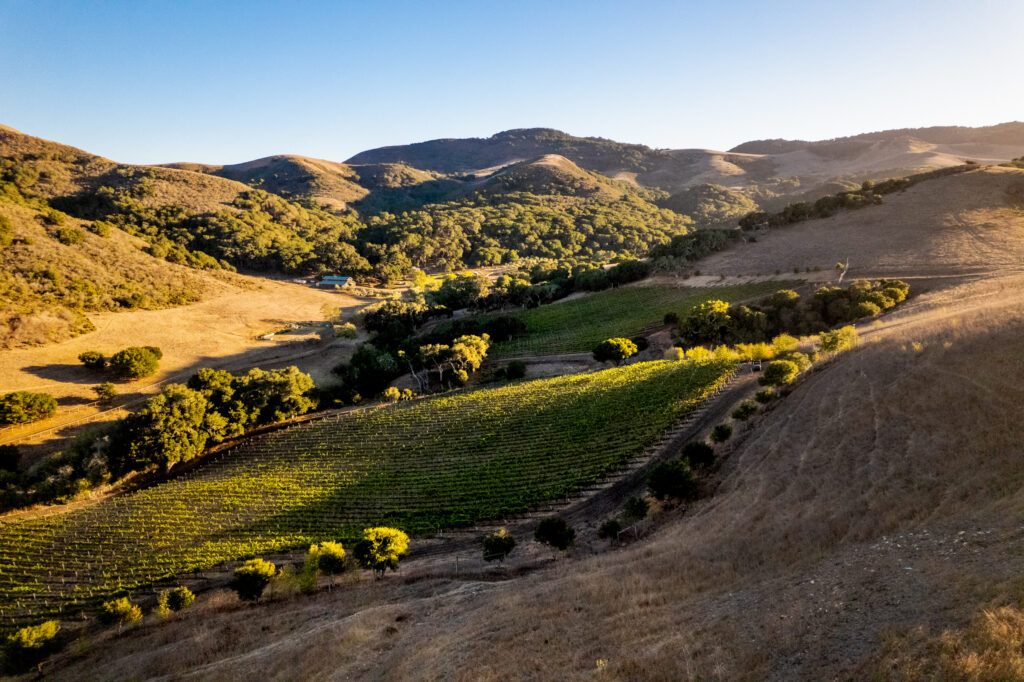
At Jalama Canyon Ranch, our farming philosophy is rooted in the belief that ecological health, agricultural productivity, and community resilience are interdependent. We steward this 1,000-acre landscape—situated just eight miles from Point Conception, at the crest of the Santa Ynez watershed and bordering the Jack and Laura Dangermond Preserve—as a living laboratory dedicated to the […]