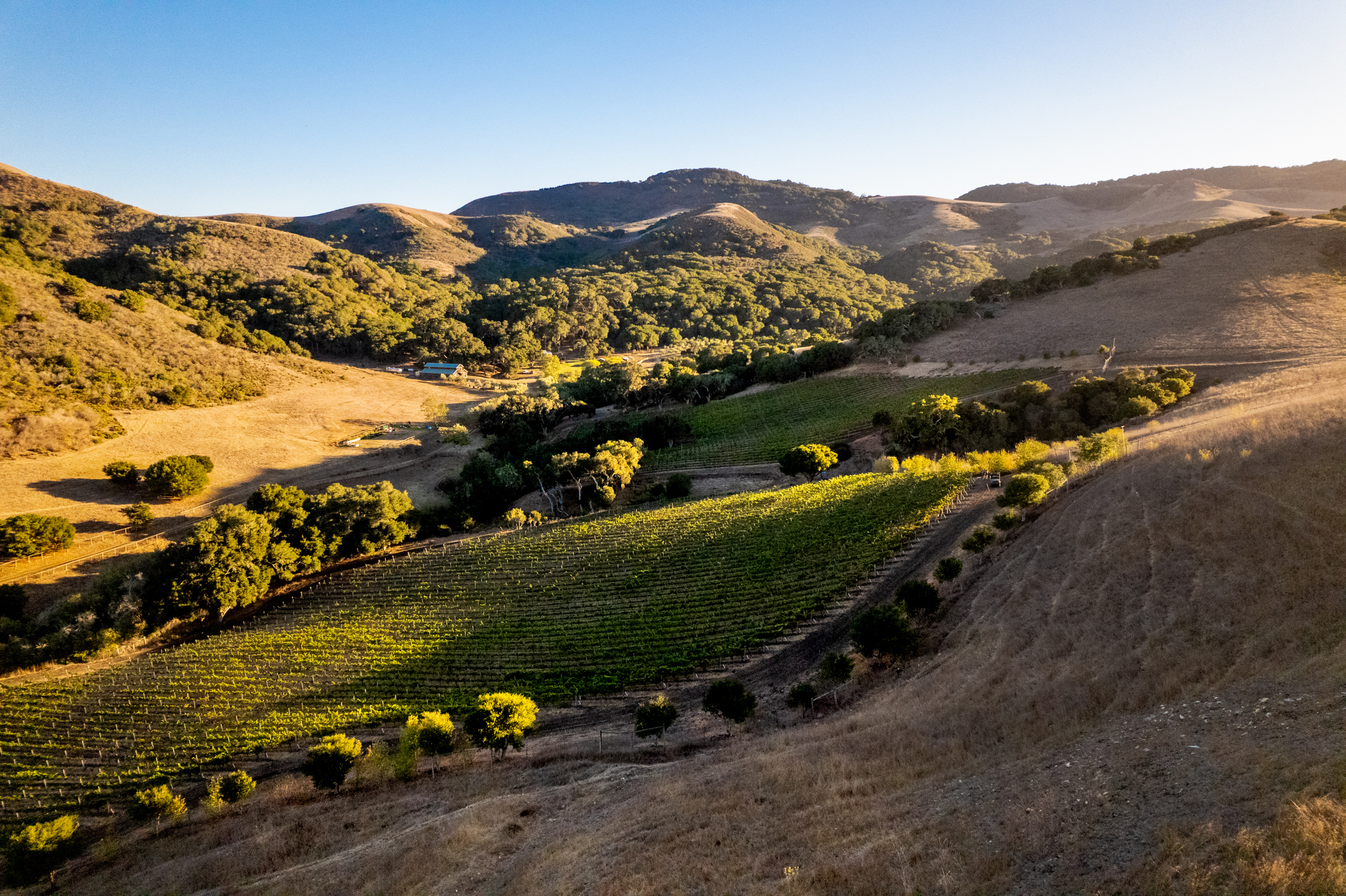
At Jalama Canyon Ranch, our farming philosophy is rooted in the belief that ecological health, agricultural productivity, and community resilience are interdependent. We steward this 1,000-acre landscape—situated just eight miles from Point Conception, at the crest of the Santa Ynez watershed and bordering the Jack and Laura Dangermond Preserve—as a living laboratory dedicated to the rapid and broad adoption of regenerative agriculture. Like much of California’s grasslands and oak woodlands, the ranch reflects the impacts of long-term land degradation and species decline. We see this not as a limitation, but as one of the greatest opportunities for ecological restoration and innovation. Our production systems are designed around whole-ecosystem function: climate-appropriate perennial cropping systems, adaptive livestock management, integrated agroforestry, and land-use redesigns that reconnect natural corridors and improve water cycling. Our overarching goal is to implement a full suite of regenerative principles and practices in ways that are observable, measurable, and replicable—supporting both working lands and ecological integrity. Desired outcomes guiding our management include: * Rehabilitated vineyards and orchards * Oak woodland and native habitat restoration * Reconnected riparian corridors * Revitalized pasturelands through adaptive grazing * Integration of tree crops and livestock * Redesigned fencing, access routes, and animal pathways for better land function * Increased soil moisture retention and water-holding capacity Through this work, we aim to demonstrate how regenerative agriculture can restore biodiversity, strengthen climate resilience, and support viable agricultural enterprises—not only here, but across California and Mediterranean climates worldwide.
Production Systems: Agroforestry, Diversified, Livestock, Native Habitat (Low / No Management), Orchard and Vine Crops, Rangeland, Vine crops
Crops/products: Cattle, Cover Crops, Goats and Kids, Grapes Wine, Livestock, Mushrooms, Native Plants, Olives, Pasture Range
Conservation Practices: Adaptive Multi-Paddock Grazing, Agroforestry, Aquaculture Pond, Biological Amendments, Carbon Farming, Climate Smart Practices, Compost Application, Compost Tea, Conservation Cover, Conservation Tillage, Contour Buffer Strips, Cover Crop, Fence, Grass-Fed, Hedgerow Planting, Holistic Planned Grazing, Integrated Pest Management, Livestock Integration, Managed Pasture Grazing, Organic, Pollinator Habitat, Prescribed Grazing, Range Planting, Raptor Perches, Regenerative Farming Practices, Regenerative Grazing, Riparian Restoration, Rotational Grazing, Sap Analysis, Silvopasture, Soil Health Practices, Soil Sampling, Solar Panels, Stream Habitat Improvement and Management, Tree/shrub Establishment, Upland Wildlife Habitat Management, Wildlife Habitat Planting, Windbreaks/Shelterbelt Establishment and Renovation, Woody Residue Treatment
General Soil Types: Clayey/Fine, Hardpan/Claypan/Restrictive, Loamy, Rocky
WILLING TO BE CONTACTED ABOUT: Successes and challenges, Research opportunities, Funding opportunities, Other: Outreach and Education Opportunities